
-Taif Ahmad
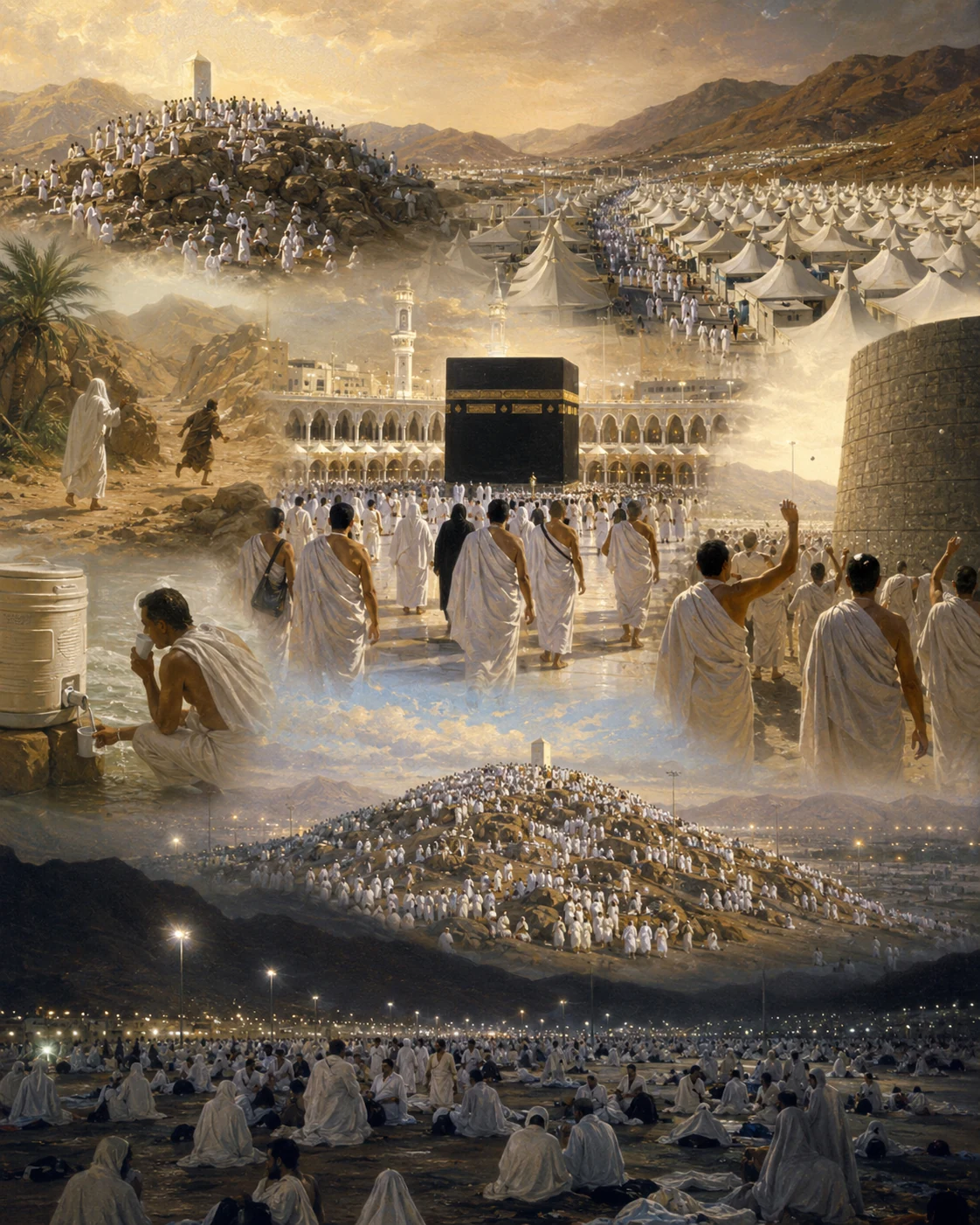
Hajj is an obligatory act of worship and one of the five foundational pillars of Islam. Yet among the pillars, its nature and significance possess a uniquely profound dimension. The Prophet ﷺ said: “Islam is built upon five pillars: bearing witness that there is no deity except Allah and that Muhammad is the Messenger of Allah, establishing Salat, paying zakat, performing Hajj, and fasting in Ramadan.” - Sahih al-Bukhari Among these pillars, the testimony of faith remains compulsory upon every Muslim from cradle to grave. Salat is to perform five times daily. Fasting returns every Ramadan. Zakat becomes due annually upon those who possess sufficient wealth (nisab). But Hajj stands apart, for it is mandatory only once in a lifetime. Allah says: “Pilgrimage to this House is an obligation by Allah upon whoever is able among the people.” - Qur’an 3:97 For this reason, both financial and physical capability are essential conditions for performing Hajj. Many Muslims around the world never attain the financial means. Others possess the means but lack the physical strength. And then there are some other unfortunate souls whom Allah has blessed with both wealth and health, yet not with the firm determination. May Allah guide and bless them. Hajj is not merely a journey of the body, but also of wealth, mind, and soul. In that spirit, here are a few reflections and practical lessons for those preparing to embark upon this sacred journey.
1. Hajj: Distinct Religious Preparation
Hajj is an intensely structured act of worship, performed only on specific days of the year - from the 8th to the 12th or 13th of Dhul Hijjah - and only in designated places: Mina, Arafat, Muzdalifah, and Makkah. Beyond these days and places, there is no Hajj. Mistakes in Duhr prayer may be corrected during Asr. Errors while fasting may be compensated through Qada or Kaffarah. Discrepancies in Zakat calculation can also be rectified and repaid later that year or next. But, certain lapses during Hajj may be impossible to amend afterwards especially since for most believers, the opportunity comes only once in a lifetime. Therefore, pilgrims should not rely entirely on Hajj guides or organizers. A Muallim (guide) may assist a pilgrim, but cannot perform the Hajj on their behalf. Before boarding the plane, one should become reasonably familiar with the rituals, rulings and sequences of Hajj.
Many unnecessary customs and rituals are often mistaken as essential rites of Hajj. These should be avoided. Scholars may differ on certain matters, and in such cases, one should follow what appears most sound or what trusted scholars or guide advise - without descending into pointless disputes and arguments. The Prophet ﷺ said: “Whoever performs Hajj for the sake of Allah and avoids indecent speech and sins will return as pure as the day his mother gave birth to him.” — Sahih al-Bukhari
2. Hajj: A Test of Patience and Forgiveness Throughout the entire journey of Hajj, two tests repeatedly emerge before each pilgrim: patience with oneself and forgiveness toward others. From the moment pilgrims leave their homeland until they return home, these tests continue relentlessly. Many fellow pilgrims may be traveling abroad for the very first time. Some may never have flown before, neither used elevators regularly, nor stayed in hotels. Many are elderly and physically exhausted. Roommates may take too long in the washroom, forget room keys, leave wet clothes on another’s bed, or become difficult under stress. Muallim may fail to fulfill half the promises they made before departure. Allah says: “Indeed, Allah is with them who keep patience.” - Qur’an 2:153 And the Prophet ﷺ taught: “Whoever forgives, Allah increases him in honor; and whoever humbles himself for the sake of Allah, Allah raises his status.” - Sahih Muslim Therefore, in such heated moments, patience becomes an act of worship. One must cool the temper, soften the ego, and learn to forgive repeatedly. The author even recalls witnessing pilgrims nearly incline into physical altercations inside the plane on the way to returning home after completing Hajj. That is why, throughout the journey one must constantly pray: “O Allah, make it easy and accept it from us.”
3. Hajj: Mundane Preparation Pilgrims should make thoughtful preparations considering the climate and conditions of Makkah and Madinah. Clothing, footwear, umbrellas, and other essentials should be organized carefully
through checklists. Still, there is no need for panic if something is forgotten. Almost everything can be purchased there, though often at slightly higher prices. What matters more is physical endurance. During Hajj, extensive walking is a usual necessity- between mosques and hotels, during tawaf, and throughout the rites of pilgrimage. Developing the habit of brisk walking several kilometers daily before departure can make the experience significantly easier.
4. Hajj: Spiritual Takeaways Hajj is the annual gathering of the global Muslim Ummah. After the construction of the Ka‘bah, Allah commanded Prophet Ibrahim (AS) to proclaim the pilgrimage to humanity: “And proclaim the Hajj to mankind. They will come to you on foot and on every lean camel from every distant pass.” - Qur’an 22:27 Yet many pilgrims spend their days occupied only with tawaf, Qur’an recitation, shopping, or socializing with fellow countrymen. While these have their place, Hajj offers something far greater. Visit the historic sites connected to the early struggles of Islam. Reflect upon the hardships endured by the Prophet ﷺ and his companions and the righteous generations before us. Feel, within the heart, the sacrifices through which Islam spread across those deserts and mountains. Most importantly, engage with Muslims from across the world. During the apparently idle days in the tents of Mina, walk beyond own tent, interact with pilgrims of different languages, cultures, and ethnicities. Share food when possible, exchange dua’s, and witness firsthand the remarkable diversity of the Muslim Ummah. Islam, as a universal civilization, embraces numerous regional cultures while preserving a single creed and brotherhood. To complete Hajj without realizing this spiritual truth is to miss one of the pilgrimage’s greatest gifts. The Messenger of Allah ﷺ declared: “The reward of an Mabroor (accepted) Hajj is nothing less than Paradise.” - Sahih al-Bukhari May Allah grant us all the honor of visiting His Sacred House, accept our pilgrimage, and bless us with a Hajj Mabroor.