Guests of Allah Hajj is one of the fundamental pillars and obligatory duties of Islam. It is compulsory once in a lifetime for every financially and physically capable Muslim. Hajj is an important means of attaining closeness to Allah. Numerous rewards and virtues of Hajj have been mentioned in the Hadith. Below is a detailed discussion about what Hajj is, its rituals, upon whom it is obligatory, its importance and virtues, and the consequences of neglecting it.
What is Hajj?
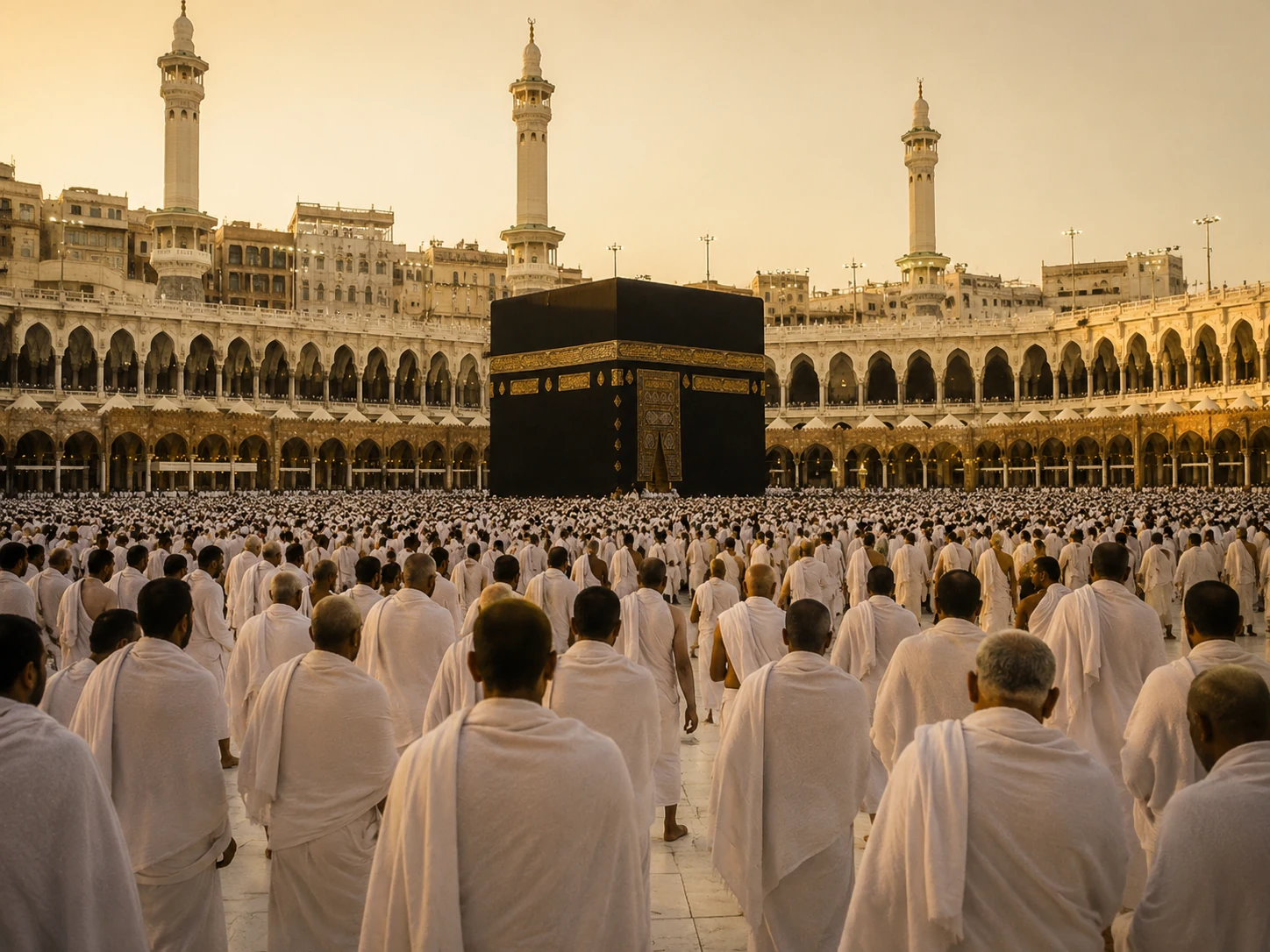
The word “Hajj” is Arabic. Linguistically, it means “to intend” or “to journey.” In Islamic terminology, it refers to visiting the Sacred House of Allah (the Ka‘bah) at a specified time while performing specific rituals. The designated time for Hajj is during the sacred months: Shawwal, Dhul- Qa‘dah, and the first ten days of Dhul-Hijjah—especially from the 8th to the 12th of Dhul-Hijjah, during which the core rituals of Hajj are performed. The designated places for Hajj include the Holy Ka‘bah, Safa and Marwah, Mina, Arafah, and Muzdalifah. For pilgrims coming from distant places, visiting the Prophet’s Mosque and the blessed resting place of Prophet Muhammad (peace be upon him) in Madinah is also highly emphasized.
Rituals of Hajj
The rituals of Hajj include: * Entering into Ihram * Reciting the Talbiyah
* Performing Tawaf and Sa‘i * Standing at Arafah * Staying at Muzdalifah * Staying at Mina * Throwing pebbles (Rami) * Offering sacrifice (Qurbani/Dam) * Shaving or trimming the hair (Halq or Qasr) * Visiting Madinah and the Prophet’s Mosque
The Obligation of Hajj
Hajj is an obligation prescribed by Allah. Allah says: “Pilgrimage to the House is a duty owed to Allah by all who are able to undertake it.” (Surah Aal ‘Imran: 97) The Prophet Muhammad (peace be upon him) said: “O people! Allah has made Hajj obligatory upon you.” Aqra ibn Habis (RA) asked: “Is it obligatory every year, O Messenger of Allah?” The Prophet (peace be upon him) replied: “If I had said yes, it would have become obligatory every year, and you would not have been able to fulfill it. Hajj is obligatory only once in a lifetime. Whoever performs it more than once, it is voluntary.” (Bukhari: 7288)
Perform Hajj Without Delay
Those upon whom Hajj becomes obligatory should perform it as soon as possible. Since no one has certainty even about the next second of life, delaying for years is risky. The Prophet (peace be upon him) said: “Whoever intends to perform Hajj should hasten to do so.” (Sunan Abu Dawud: 1732)
Upon Whom is Hajj Obligatory?
Hajj becomes obligatory when the following five conditions are met:
1. Being Muslim
2. Being sane
3. Being an adult
4. Being free (not enslaved)
5. Being financially and physically capable
For women, an additional condition applies: * Traveling with a Mahram (a male relative whom she cannot marry)
Important Clarifications
Someone may become obligated to perform Hajj even if Zakat is not obligatory upon them. This is because Zakat depends on possessing a certain amount of wealth (nisab), whereas Hajj depends on having the means to travel to and from Makkah. If someone can sell part of their property or business goods to finance Hajj and still maintain their livelihood afterward, Hajj becomes obligatory upon them. A common misconception in Muslim societies is that one must first send parents for Hajj before performing their own. This is incorrect. If financially able, one may go together with parents; otherwise, one must first fulfill their own obligatory Hajj. Similarly, some people think they should marry off their children before performing Hajj. Islam does not support delaying obligatory Hajj for this reason.
Virtues and Rewards of Hajj
The Prophet (peace be upon him) described accepted Hajj (Hajj Mabroor) as one of the best deeds. When asked about the best deeds, he replied:
1. Belief in Allah and His Messenger
2. Jihad in the path of Allah
3. Accepted Hajj (Bukhari: 1519)
Hajj Erases Sins
The Prophet (peace be upon him) said: “Whoever performs Hajj for the sake of Allah and avoids indecency and sin will return as sinless as the day his mother gave birth to him.” (Bukhari: 1521)
Reward of Paradise
Abu Hurairah (RA) narrated that the Prophet (peace be upon him) said: “An accepted Hajj has no reward except Paradise.” (Bukhari: 1773; Muslim: 1349)
Hajj Removes Poverty
Some people fear becoming poor due to Hajj expenses. However, the Prophet (peace be upon him) said: “Perform Hajj and Umrah consecutively, for they remove poverty and sins just as a furnace removes impurities from iron, gold, and silver.” (Sunan Ibn Majah: 2887) Another Hadith states: “Spending for Hajj is like spending in the path of Allah, whose reward is multiplied up to seven hundred times.” (Musnad Ahmad: 23000) Pilgrims are Guests of Allah The Prophet (peace be upon him) said: “The pilgrims of Hajj and Umrah are the delegation of Allah. If they supplicate to Him, He answers them; if they seek from Him, He grants them.” (Musnad al-
Bazzar: 1153)
Consequences of Neglecting Obligatory Hajj Neglecting Hajj despite having the means has severe consequences. Umar ibn al-Khattab (RA) said: “Whoever has the means to perform Hajj but does not do so, it does not matter whether he dies as a Jew or a Christian.” (Tafsir Ibn Kathir)
Allah says: “Whoever disbelieves, then surely Allah is free from need of all the worlds.”
(Surah Aal ‘Imran: 97)
In a Hadith Qudsi, Allah says: “I granted My servant health and ample provision, yet five years pass and he does not visit My House—such a person is deprived.” (Ibn Hibban: 3703) ⸻
Is Ihram Valid Without Talbiyah?
Hajj and Umrah begin with entering into Ihram. Ihram is a spiritual state in which a believer dedicates themselves completely to Allah and refrains from certain lawful things. Many people mistakenly believe that merely wearing the Ihram garments, praying two rak‘ahs, and making intention silently is sufficient. However, according to Islamic jurisprudence, Ihram is not complete without reciting the Talbiyah. Ihram consists of two inseparable elements:
1. Intention for Hajj or Umrah
2. Verbal recitation of the Talbiyah (“Labbayk Allahumma Labbayk”) Without Talbiyah, a person is not considered a Muhrim (one in the state of Ihram).
Important Note
If someone wears Ihram garments and even performs prayer but does not recite the Talbiyah after making intention, then according to Shariah they are not yet in Ihram. The restrictions of Ihram do not apply until Talbiyah is recited. Therefore, pilgrims must ensure that they recite the Talbiyah properly before crossing the Miqat. ⸻
Reward of Reciting the Qur’an in Masjid al-Haram Masjid al-Haram and the Holy Ka‘bah are the most honored places on earth. Every righteous deed performed there receives immense reward. The Prophet (peace be upon him) said: “One prayer in Masjid al-Haram is equal to one hundred thousand prayers elsewhere.” (Sunan Ibn Majah: 1406) Scholars differ regarding whether Qur’an recitation receives exactly the same multiplication of reward, but they unanimously agree that all acts of worship in Makkah are greatly rewarded.
Unique Spiritual Experience
Reciting the Qur’an in the place where revelation descended creates a unique spiritual experience. Sitting before the Ka‘bah while reciting Allah’s words increases concentration, humility, faith, and tranquility. Advice for Pilgrims * Value every moment in the Haram * Engage in Qur’an recitation and remembrance of Allah * Reflect deeply on the meanings of the Qur’an * Maintain proper etiquette and sincerity ⸻ The Historic Question and the Prophet’s Wisdom Once the Prophet (peace be upon him) said: “Allah has made Hajj obligatory upon you, so perform Hajj.” A companion asked: “Every year, O Messenger of Allah?” He repeated the question three times. The Prophet remained silent and then said: “If I had said yes, it would have become obligatory every year, and you would
not have been able to do it.” (Sahih Muslim: 1337) This Hadith clearly shows that Hajj is obligatory only once in a lifetime. Importance of Performing Hajj Promptly Although obligatory only once, delaying Hajj after becoming capable is discouraged because illness, financial hardship, or death may occur unexpectedly. The Prophet (peace be upon him) said: “Whoever intends to perform Hajj should hasten to do so, for he may become ill or lose his means of travel.” (Musnad Ahmad; Sunan Ibn Majah) “Deprived and Unfortunate” Allah says in a Hadith Qudsi: “I granted My servant health and abundant provision, yet five years pass and he does not come to My House; such a person is deprived and unfortunate.”